12 Notes of 2025

Almost towards the end of 2025, it is time for a moment of looking back – and to remove the silence in this blog. Twelve notes came into my mind that relate to own experiences, wider discussions, and current and future challenges for science, research, and education. The foundation is curiosity and the strive to remain able to take the perspective of a critical observer of what I am doing and what happens around me – much fitting to my interest in systems theory and especially work by Niklas Luhmann.

The following twelve notes are in random order:

  1. Universities and research institutes have produced a huge variety of empirical evidence, innovative ideas, provocative thoughts, and collaborative efforts.
  2. Doing good research has been challenged from multiple directions, but research has also found many innovative ways to connect with societal challenges for short- and long-term futures.
  3. Academia begins recognising more diverse formats for research communication besides journal articles, e.g., videos, podcasts, arts, interactive formats, even games.
  4. The rise of generative artificial intelligence has given academic (long-distance) travel a boost as a criteria for recognition and rewards. Social media fills up with photos of smiling faces in versatile places. Are key roles of resfluencers (research influencers) emerging, and what does it mean for in-depth questions, self-reflexivity, our climate, and the ideal personal characteristics to be researchers?
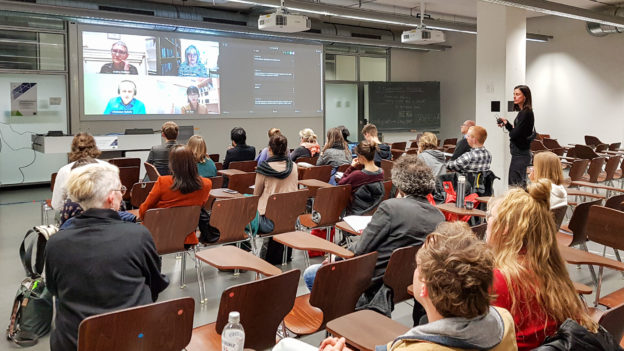
  5. Academic events play an enlarged role for showcasing, supported by shifting towards more and shorter events instead of fewer and deeper ones. Struggles and competitions intensify to reach a decent-sized audience, but also more loss of control of own agendas surfaces.
  6. I witnessed the first largely AI-generated academic presentation. The presenter did not unveil it, the audience did not notice it. And I ponder on: what is real, what makes sense, and what will 2026 bring?
  7. Students are increasingly able to play with diverse skills and products, while having to deal with more duties within and beyond studies at the same time.
  8. Generative artificial intelligence inducts a sense of rush and being persecuted. Even the best and fastest writer can no longer outpace AI in terms of quantity. But: how to then focus on quality, or what is it, and which? How to deal with future situations in which your counterpart does not know what she/he has written and sent/suggested before?
  9. More results are widely and openly available (open access), but open insights into ongoing research, struggles, and failures, remain scarce.
  10. Short-term impact is one of the key words of 2025. Yet open is the quest for answers to fundamental societal questions and long-term directions beyond a short project period.
  11. Research grapples and regularly fails with finding models that move beyond the linear approach of setting a project up, following pre-defined steps over a pre-defined period of time, and delivering the intented result in the expected way and inducing the expected use. Reality is often faster or different than any neatly-developed structure – and seems to accelerate even faster and in more unpredictable ways.
  12. Trust, honesty, and openness are and remains key for successful work, from students to professors, but get also challenged or even abused from various levels.

These are unfinished and open observations. Unfinished in the sense that they do not shout out certainty, but create uncertainty. I will take it take forward towards 2026 and am looking forward to continue thinking, discussing, challenging, learning, … In all cases: many warm wishes for a peaceful and happy year.

To finish with a quote: “Science, above all else, deals with self-generated uncertainty” (Niklas Luhmann, 1992, ‘Die Wissenschaft der Gesellschaft’, p.103, translated from German).

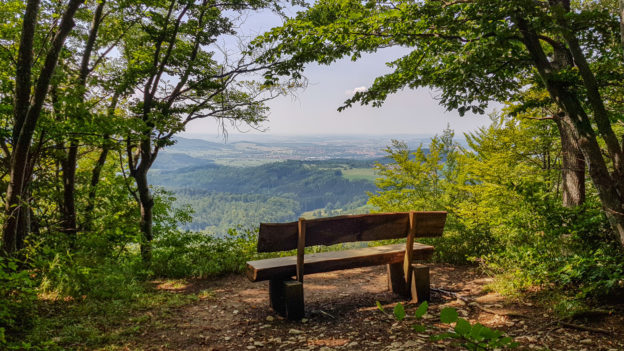
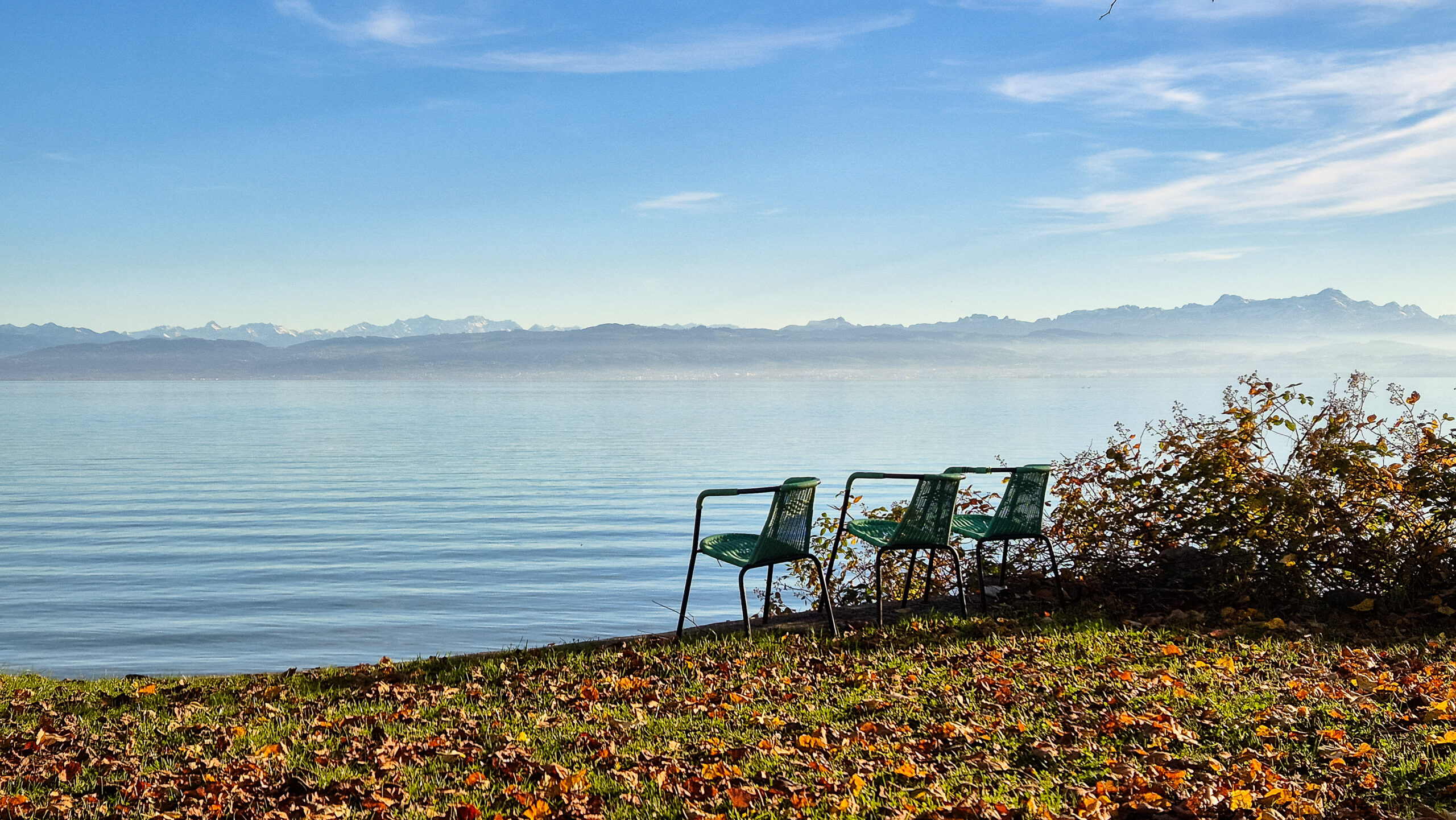
Disclaimer: This post is fully written by me and without support by artificial intelligence. If it holds edges for discussion, this is intended and an open invitation. Photo: Friedrichshafen, Bodensee/Lake Constance, Germany, November 2025 (own photo)
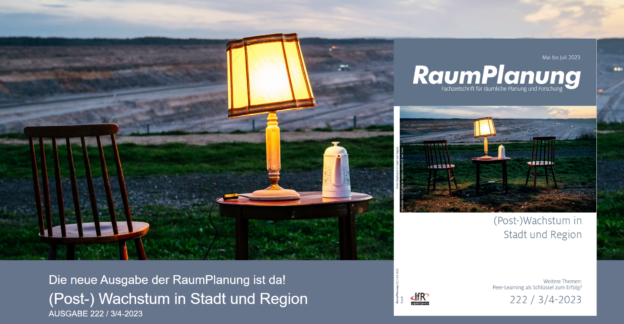
(Post-) Wachstum in Stadt und Region

(Post-)Wachstum in Stadt und Region: Gedankenspiel oder fruchtbarer Nährboden für integrierende Planungsansätze?

This post (in German) follows my introduction to the ‘RaumPlanung im Fokus’ (online) event from 8th September 2023 for the special issue on ‘(Post-)Growth in Cities and Regions’, published in the German RaumPlanung by the Informationskreis für Raumplanung e.V. (www.ifr-ev.de). During this event, Niels Kück, Alexander Barnsteiner, Alois Humer, and Aurel von Richthofen presented insights from their articles, followed by a discussion with the audience led by the editorial team of Peter Ache, Katja Veil, and me. The event was facilitated and hosted by the IfR e.V. For the special issue, see https://ifr-ev.de/raumplanung/post-wachstum-in-stadt-und-region.

Die kritische Auseinandersetzung mit Wachstum und Postwachstum in der Stadt- und Raumplanung hat sich in den vergangenen Jahren von einem Gedankenspiel zu Fragestellungen mit hoher gesellschaftlicher und planungspraktischer Relevanz entwickelt. Schlagworte wie Dekarbonisierung, Übergewinnsteuer, Gasmangellage, aber auch Gemeinwohl und Gesundheit, sind nur einige Hinweise auf grundlegende Fragen. Mit breiten Fragen und einer offenen Suche sind wir auch in den Call for Papers für dieses Themenheft der RaumPlanung gestartet.

Continue reading

Planning and the Mind

The Association of European Schools of Planning (AESOP) thematic group on Planning Theories hosts a series of talks and discussions in their ‘Infinity Series’, inspired by the Marvel Universe. On 8th March 2022, I talked about “Planning and the Mind”. In the following, my input presentation to this discussion.

I would like to start with some of my thoughts on “Planning and the Mind”.  It is hard for me to talk about the mind today, while we see how an isolated and brutal mind can cause so much pain, war, destruction, and emptiness. Nevertheless, this strengthens my belief in spatial planning in democratic societies and my ambition to talk about planners today.

Continue reading
Schwäbische Alb

Certainly creating uncertainty: a complex post-corona roles puzzle

Corona unveils a canvas to learn for the roles that planners need to explore, develop, and enact when facing global crises. Two counterintuitive claims help explaining. First, planning needs more uncertainty to take its roles. The more we know about the unfolding crisis, the harder any action becomes. This takes us to the heart of planning: values and societal goals. Second, planners should plan for uncertainty, both acknowledging and actively creating uncertainties. Reduction and production of different uncertainties are inevitably linked. Post-corona planning must even plan for uncertainty to succeed.

Continue reading
Pint of Science - Netherlands 2050

The Netherlands 2050

To the start of the academic year 2020-21 in Groningen, I was asked to deliver a short pitch (‘Pint of Science’) on the future of the Netherlands in 2050. In my function as a a coordinator of the Master Society, Sustainability and Planning (SSP), I looked at the programme and developed my own view that I will hereby share in a few words. I have deliberately chosen a positive story here that aims to motivate, given the amount of environmental and social problems visible to us.

Continue reading
Roundtable Postgrowthplanning

Hybrid conferencing and hybrid academics – experiences and future thoughts

The future of academic work might look different than it used to be. We will not see the re-emergence of larger venues and (international) conferences before at least early 2021. While small-scale meetings become possible again, gathering with hundreds of people from different countries in one place seems to be of a distant past. Travel restrictions provide unequal opportunities to participate in academic events depending on locations. However, there is something in between going and not going. The sustainability of (large) conferences was in question long before Corona made the reduction of travels an immediate health necessity (see e.g. Wenner et al. 2019). Hybrid conferencing (digital & physical combined) and hybrid academics may be on the rise. In February 2020, without knowing about upcoming Corona restrictions, we engaged in a hybrid format in Dortmund on “Post-growth from international planning perspectives: Digital roundtable on the future of planning in a post-growth world”.

Continue reading
Detroit 2018

Post-Corona avenues in spatial planning practice & research

We live in an extreme situation in most countries since mid of March 2020. It can hardly be expressed with words in any of our languages. We are moved to see impacts as well as strong collective measures taken in Europe and worldwide. We all live in space and we will continue to live and plan in space. The more we get knowledge and control over COVID-19, the more we will be able to think ahead and to restart a collective debate on spatial visions, their ethical/moral foundations and ways to organize and lead them. I am active in discovering future possibilities for spatial planning, changes induced by Corona and our means to lead spatial development in times of crisis.

Continue reading
Melbourne (2015)

Corona: the ones we do not see now, but need to look at

It sounds easy: let’s make our work online. We can discuss online, we can meet and even have social events online. We can video conference with family, friends and colleagues at any time and, so far, mostly with reliable networks. This is an amazing and sudden success of digitalization that was unforeseen and deemed impossible only a few weeks ago. It also brought people together (again), supported networks of help and support and made neighbors recognize each other’s immediate needs. However, this produces new forms of exclusion beyond general questions of access to technology and internet. There are a number of groups that get out of sight if we #stayathome and that need our special attention as spatial planners. Usually, we would see these groups outside and using our public spaces, our infrastructures and being usual part of our urban or rural life.

Continue reading
Belgrade, 14 March 2020

Corona: looking for sense with limited senses

While we #stayathome, we experience an amazing speed in developing ways to continue spatial planning work through the digital means we have available. Digital transformation of society and of our lives is actually happening and becomes tangible for each and all of us. In an extraordinary speed do universities switch to 100 % online education, cutting off all physical contacts, excursions and field work and continuing with a diverse range of lectures, seminars and events. Some of these developments will provide role models for future global work and education. However, this is not without new questions for our profession of spatial planning.

Continue reading
Ann Arbor, MI

Planners for Future – or: how should we (re-)act?

The new decade starts in 2020 with intensified talks about environmental change, climate change and a global crisis. These challenges do not only excel the global dimension of human activity. They also exhibit the emergence and growth of strong social movements like ‘Fridays for Future’, ‘Extinction Rebellion’ and many more.

Continue reading